

Imports of livestock and related products into Nigeria increased by 14.5 percent to N1.71 trillion in 2025, according to data from the National Bureau of Statistics.
The figures show a rise from N1.49 trillion recorded in 2024, indicating continued reliance on imported livestock products.
The livestock sector plays a significant role in Nigeria’s agricultural economy, providing meat, dairy and other animal products.
Despite the sector’s size, Nigeria continues to depend on imports to meet domestic demand for livestock products.
Data obtained from the National Bureau of Statistics indicates that the increase in imports occurred amid ongoing efforts by the country to diversify its economy and strengthen agricultural production.
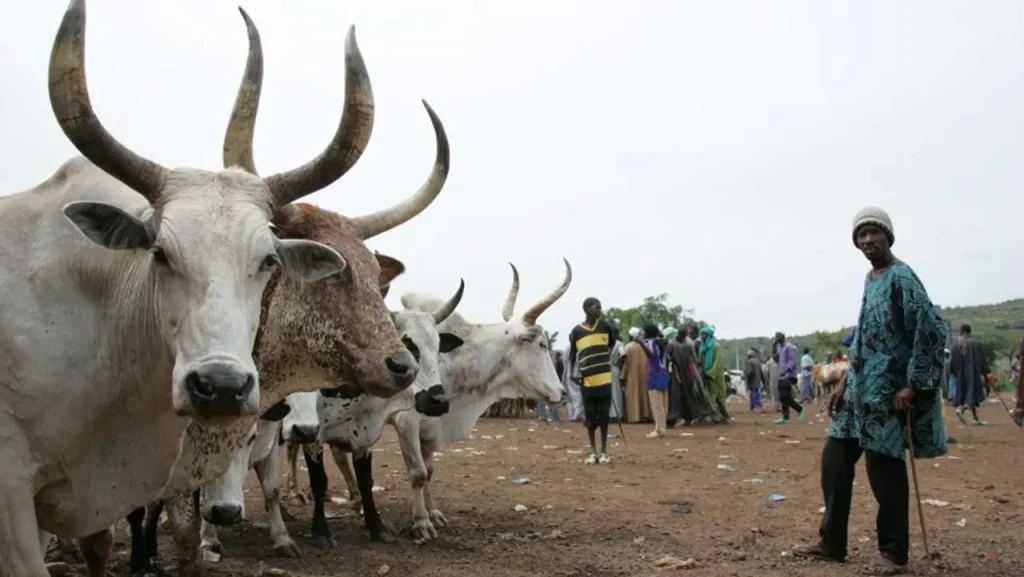
According to available statistics, Nigeria has an estimated 273 million livestock animals, including goats, sheep and cattle.
The livestock population includes:
- 138.95 million goats
- 64.93 million sheep
- 54.81 million cattle
The poultry population is estimated at about 250 million birds, according to sector figures.
Despite these numbers, stakeholders note that domestic production remains insufficient to meet demand for several livestock products, particularly dairy.
Officials from the Federal Ministry of Livestock Development said Nigeria spends over $1.5 billion annually on dairy imports.
Data from the Food and Agriculture Organization also indicates that about 60 percent of dairy products consumed in Nigeria are imported.
Domestic production is estimated at 0.5 million tonnes annually, while demand stands at about 1.3 million tonnes.
Despite the rise in imports, the livestock sector remains a major contributor to Nigeria’s economy.
According to the National Bureau of Statistics, the sector contributed N11.9 trillion to Nigeria’s Gross Domestic Product in 2024, representing 5.6 percent of total GDP.
However, stakeholders say structural challenges such as low productivity and gaps in dairy production continue to affect the sector’s competitiveness.