

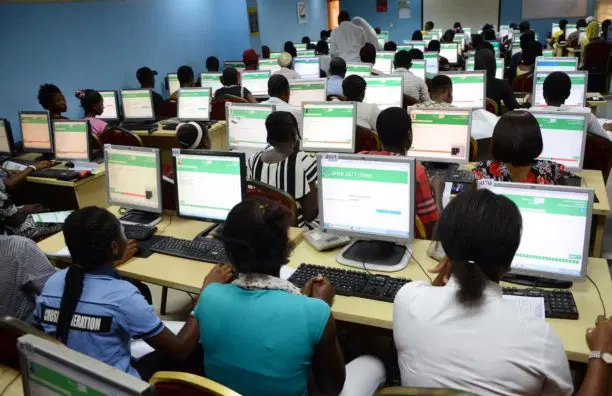
UTME 2026 candidates are set to exceed 2.2 million as the Joint Admissions and Matriculation Board prepares to commence the nationwide examination on April 16. The large number reflects sustained demand for tertiary education and places the exercise among the largest coordinated examinations in Nigeria.
The Unified Tertiary Matriculation Examination remains the primary gateway for admission into universities, polytechnics, and colleges of education in Nigeria. Conducted annually by the Joint Admissions and Matriculation Board, the exam has transitioned fully to a computer-based format in recent years.
The scale of participation has continued to grow, with over 2.2 million candidates registered for the 2026 exercise, reflecting increasing competition for limited admission spaces across institutions.
JAMB has maintained reforms aimed at improving examination integrity, including stricter monitoring of centres, enhanced verification systems, and sanctions for malpractice.
Preparations for the exercise show that UTME 2026 candidates will sit for the examination across 966 accredited Computer-Based Test centres nationwide. This follows the delisting of 23 centres due to poor performance during the mock examination.
The board has directed all candidates to print their examination notification slips, which contain critical information such as date, time, and venue. It warned that failure to comply could disrupt participation.
JAMB spokesman, Fabian Benjamin, stated that candidates must familiarise themselves with their examination centres ahead of time to avoid logistical challenges on the day of the test. To safeguard the process, the board has introduced enhanced security measures and reiterated that strict penalties will be applied in cases of examination malpractice.
Registrar of JAMB, Prof. Is-haq Oloyede, also disclosed that 11 technical officers had been delisted for poor performance, with additional sanctions underway. He emphasised the need for professionalism among officials, noting that the success of the exercise depends largely on their conduct.
JAMB further revealed that a newly tested alternative examination system achieved about 90 per cent success rate during trials, indicating ongoing efforts to improve system reliability. The scale of UTME 2026 candidates highlights growing pressure on Nigeria’s tertiary education system, particularly in terms of admission capacity and infrastructure.
Enhanced security and stricter enforcement measures reflect continued efforts to curb malpractice and improve credibility in the examination process. The delisting of underperforming centres also signals increased accountability among service providers.
For candidates, compliance with examination guidelines and early preparation remain critical to successful participation in the exercise.