

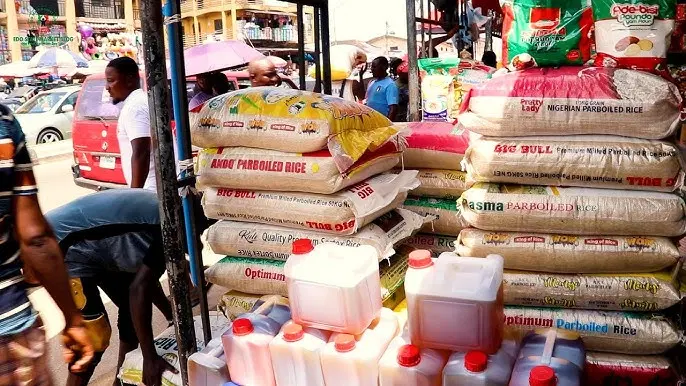
The rice price surge in Nigeria has intensified as the National Bureau of Statistics (NBS) reported that the average price of a 50kg bag of local rice increased by 20.5 per cent, reaching about N112,000 in recent market data. The report reflects continued pressure on staple food prices across major markets in the country, driven by inflation, supply constraints, and rising production costs.
Rice remains one of Nigeria’s most consumed staple foods, with demand consistently outpacing domestic supply despite government efforts to boost local production. Over the past two years, prices have fluctuated sharply due to inflationary pressures, transportation costs, insecurity in farming regions, and currency instability affecting input imports such as fertilisers and machinery.
Market data across 2025 and early 2026 shows that rice prices have remained volatile, with local 50kg bags previously ranging between about N55,000 and N95,000 depending on location and quality before the latest increases.
The latest rice price surge underscores the broader challenge of food inflation in Nigeria, where transport costs and supply chain disruptions continue to affect commodity pricing across states.
According to the National Bureau of Statistics report referenced in market tracking updates, the average price of a 50kg bag of locally produced rice rose by 20.5 per cent to approximately N112,000.
The rice price surge reflects a continuation of upward pressure on food commodities, with analysts attributing the trend to reduced supply in some producing regions, high logistics costs, and increased demand in urban centres.
Market observations indicate that prices vary significantly across regions, with some South-East markets recording lower averages compared to major cities like Lagos and Abuja due to proximity to production hubs. However, national averages continue to trend upward.
Traders also report that the cost of transporting rice from rural milling centres to urban markets has increased due to fuel costs and poor road infrastructure, further contributing to retail price escalation.
The rice price surge has also been influenced by fluctuations in paddy supply from local farmers, with seasonal harvest cycles and insecurity in some farming belts affecting output consistency.
The sustained rice price surge has direct implications for household food security, as rice remains a daily staple for millions of Nigerians. Rising prices reduce purchasing power, particularly among low- and middle-income families already affected by broader inflationary pressures.
For policymakers, the trend highlights the urgency of stabilising agricultural supply chains, improving storage systems, and reducing transport bottlenecks that contribute to price instability. Economists also warn that continued food inflation could deepen poverty levels and increase pressure on wage negotiations across both public and private sectors.