
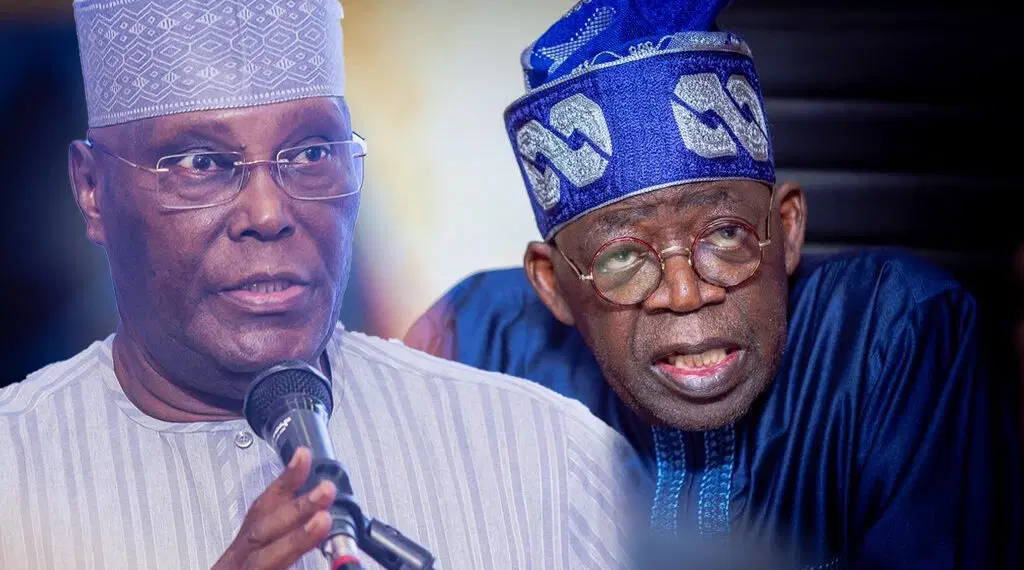
The privatisation criticism clash between former Vice President Atiku Abubakar and President Bola Tinubu intensified after Atiku’s camp accused the President of hypocrisy and distortion of facts over Nigeria’s economic reforms and rising cost of living. The exchange followed recent remarks credited to the presidency on past privatisation policies.
Nigeria’s privatisation programme has remained a central issue in political and economic debates since the return to civilian rule in 1999. The process, largely overseen by the National Council on Privatisation during the Obasanjo administration, involved the sale of several state-owned enterprises to private investors in a bid to improve efficiency and reduce government burden.
Atiku Abubakar, who served as Vice President between 1999 and 2007, played a key role in supervising the programme, which included transactions involving major companies in the banking, energy, and manufacturing sectors. Over time, the policy has remained politically sensitive, often resurfacing in debates on economic performance and governance.
Nigeria is currently facing significant economic pressure, including inflation and rising living costs, which have become central themes in national political discourse and opposition criticism of the current administration.
The privatisation criticism clash escalated when Atiku’s Senior Special Assistant on Public Communication, Phrank Shaibu, issued a statement responding to what he described as a “reckless tirade” from President Tinubu’s camp.
Shaibu accused the President of hypocrisy, arguing that criticisms of Atiku’s economic record were inconsistent with the current administration’s policies. He maintained that several privatised companies from the Atiku-led era remain operational and profitable, citing them as evidence of the programme’s outcomes.
He listed companies such as Oando Plc, Conoil Plc, Ardova Plc, Indorama Eleme Petrochemicals, Benue Cement Company, and Transcorp Hilton Abuja as examples of enterprises linked to the privatisation exercise. Shaibu further argued that the current government’s approach to restructuring the Nigerian National Petroleum Company Limited lacked transparency, contrasting it with earlier reforms.
He also referenced past documentation of the privatisation programme, stating that it was a structured reform effort aimed at promoting private-sector-led growth. The statement also included strong personal criticisms directed at President Tinubu, referencing past controversies and academic disputes, which further escalated the tone of the exchange.
The presidency had earlier criticised Atiku’s economic legacy in response to broader debates over subsidy removal, inflation, and fiscal reforms, which have contributed to ongoing cost-of-living concerns nationwide.
The privatisation criticism clash reflects deeper political tensions between Nigeria’s major political figures ahead of future elections and ongoing economic reforms. It also highlights how historical economic policies are increasingly being used as reference points in current debates over governance, accountability, and economic hardship.
For citizens, the exchange underscores the continuing focus on inflation, unemployment, and cost-of-living pressures as central political issues shaping public discourse.