
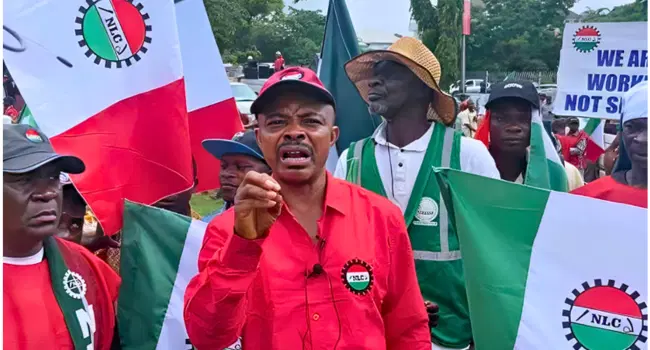
An economic hardship warning has been issued by the Nigeria Labour Congress (NLC), which says worsening insecurity, deepening poverty, and rising living costs are pushing many Nigerians to the brink of survival. The labour union warned that workers across the country are increasingly unable to cope with economic pressure, especially following the removal of fuel subsidy and persistent inflation.
Nigeria has continued to face mounting economic challenges since the removal of petrol subsidy in May 2023. The policy shift triggered sharp increases in transportation, food, and energy costs, contributing to rising inflation across the country.
Data from recent economic reports show that inflation climbed significantly over the past year, with households experiencing sustained pressure on purchasing power and living standards. Labour unions and civil society groups have repeatedly linked the worsening economic climate to declining welfare conditions for workers and low-income earners.
The latest economic hardship warning from the NLC also comes amid persistent insecurity in several parts of the country, where attacks, kidnappings, and displacement have disrupted livelihoods and economic activity.
Speaking in an interview, NLC President Joe Ajaero described the current situation as critical, stating that insecurity has severely affected workers and businesses nationwide. “Everyone in this country will tell you that insecurity has finished the country,” Ajaero said. “Workers cannot operate in those areas, and that is very important.”
He added that many workers have been displaced from their communities, while others face unsafe working conditions and uncertainty over their livelihoods. According to him, the country is witnessing increasing violations of workers’ rights, particularly in the private sector where protections remain weak.
The economic hardship warning also targeted the Federal Government’s position on fuel subsidy removal. The Minister of Finance and Coordinating Minister of the Economy, Taiwo Oyedele, had stated during an engagement with investors in France that the government would not restore fuel subsidy despite growing public concern over living costs.
“We will not bring back fuel subsidy because it creates distortions for the economy,” Oyedele said, while defending the administration’s market-driven approach to fuel pricing.
Reacting to the position, Ajaero argued that dismissing all forms of subsidy without practical alternatives was worsening social and economic pressure on citizens. He called for what he described as adaptive leadership focused on protecting public welfare during difficult economic conditions.
The economic hardship warning reflects growing tension between organised labour and government economic policy, particularly over subsidy reforms and rising inflation.
Analysts say continued increases in living costs could deepen poverty levels and place additional strain on households already affected by unemployment and insecurity. Labour groups have also warned that worsening conditions may reduce productivity and intensify industrial pressure across key sectors.
The situation further highlights the broader challenge of balancing fiscal reforms with social protection measures in Africa’s largest economy.