
President of the Dangote Group, Aliko Dangote, has alleged that entrenched interests attempted to frustrate the construction and operation of the $20 billion Dangote Petroleum Refinery, describing the opposition as part of ongoing Dangote refinery resistance within Nigeria’s oil sector. Dangote said the refinery project faced coordinated pressure from individuals and groups benefiting from the country’s longstanding dependence on imported petroleum products.
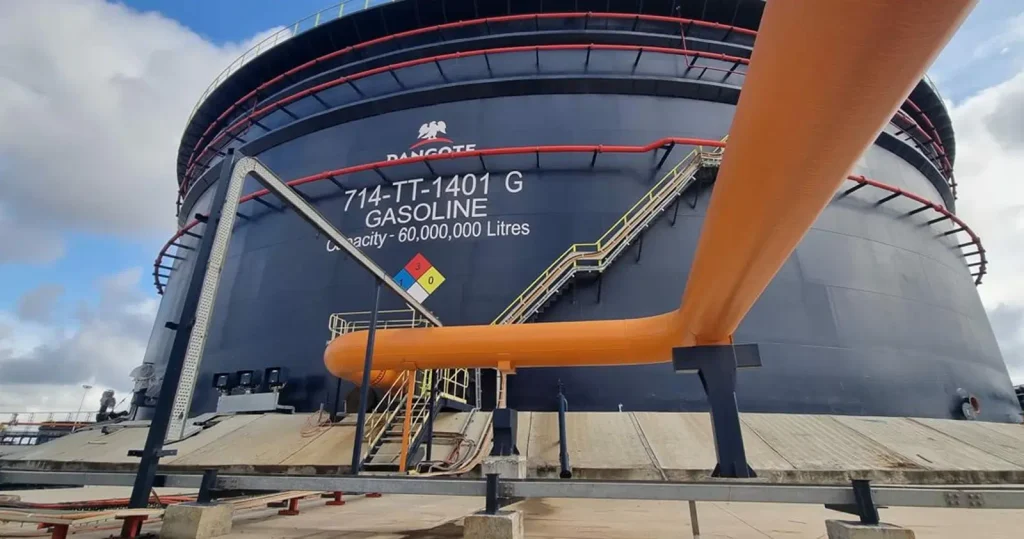
The Dangote Group refinery, located in the Lekki Free Trade Zone in Lagos, is regarded as Africa’s largest single-train petroleum refinery. The project was developed to reduce Nigeria’s reliance on imported refined products and strengthen local refining capacity.
Nigeria has historically depended heavily on fuel imports despite being one of Africa’s largest crude oil producers. The country’s state-owned refineries have struggled with operational inefficiencies and low output for years, creating a market dominated by importers and subsidy-linked supply chains.
Industry analysts have frequently linked the debate around domestic refining reforms to powerful commercial interests within the downstream oil sector. Dangote’s latest comments on Dangote refinery resistance have renewed discussions about the challenges faced by large-scale industrial projects in Nigeria’s energy industry.
Speaking at an industry event, Dangote said certain groups attempted to block the refinery project because it threatened established business interests tied to fuel importation. According to him, some individuals benefited significantly from maintaining the existing petroleum import structure and viewed the refinery as a threat to their economic influence.
Dangote stated that the resistance intensified during critical stages of the project, particularly around regulatory approvals, crude supply arrangements, and market integration. He said the refinery continued moving forward despite financial, operational, and institutional obstacles encountered during development.
According to the businessman, the scale of the Dangote refinery resistance reflected broader structural problems within the energy sector, where vested interests allegedly profit from inefficiencies and import dependency. He maintained that local refining remains essential for improving energy security and reducing pressure on foreign exchange demand linked to fuel imports.
The Dangote Petroleum Refinery has a refining capacity of 650,000 barrels per day and began phased operations after years of construction delays and financing challenges. The facility is expected to supply petrol, diesel, aviation fuel, and other petroleum products to Nigeria and export markets across Africa.
Dangote also reiterated that the refinery would contribute to stabilising fuel supply chains and reducing import costs over time. He argued that strengthening domestic refining capacity could improve industrial productivity and support broader economic growth.
Industry experts say the claims surrounding Dangote refinery resistance highlight tensions between industrial reform efforts and entrenched interests within Nigeria’s oil and gas value chain. Analysts note that the refinery’s success could significantly reshape the downstream petroleum market and alter long-standing supply structures.
Energy stakeholders further observed that the refinery’s emergence may influence pricing dynamics, foreign exchange demand, and regional fuel supply patterns once operations fully stabilise.
Economists say increased domestic refining capacity could reduce Nigeria’s dependence on imported fuel and improve balance-of-payment pressures tied to petroleum imports. Analysts also believe the refinery may strengthen energy security and create industrial linkages across manufacturing, logistics, and petrochemicals.
However, experts note that continued debates around Dangote refinery resistance reflect broader concerns over market competition, regulatory transparency, and the influence of vested interests within strategic sectors of the economy. The development also underscores ongoing policy discussions around deregulation, local refining incentives, and the future structure of Nigeria’s downstream petroleum industry.