
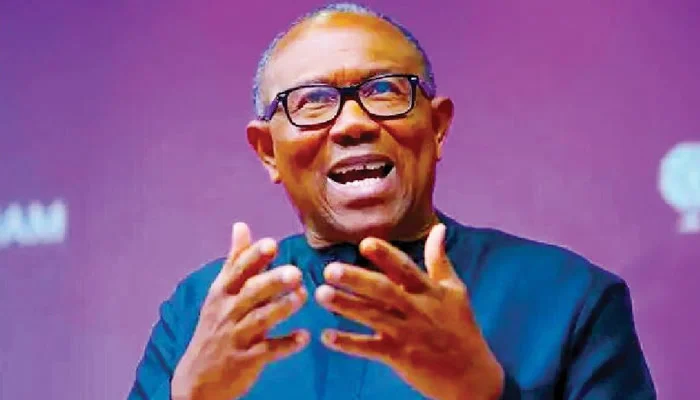
The Presidency has criticised former Labour Party presidential candidate Peter Obi over his renewed one-term promise, describing his recent statements as misleading and historically inaccurate. The reaction followed Obi’s repeated pledge that he would serve only one term if elected president, a position that has continued to generate political debate ahead of the 2027 general elections.
Peter Obi has consistently maintained that he would serve a single four-year term if elected president, arguing that focused leadership within a limited timeframe is sufficient to deliver meaningful governance reforms. He has referenced global leaders such as Abraham Lincoln, John F. Kennedy, and Nelson Mandela to support his position.
However, his stance has attracted criticism from political figures within the ruling establishment, who argue that his comparisons and justification for a one-term promise are not accurate within historical and constitutional contexts. The debate has become part of broader political positioning ahead of the 2027 elections, where opposition figures are seeking to redefine leadership narratives.
The Special Adviser to the President on Information and Strategy, Bayo Onanuga, faulted Obi’s claims, stating that his references to global leaders were misleading. He argued that Obi’s examples did not accurately reflect the historical circumstances of those leaders’ time in office.
According to the Presidency, Abraham Lincoln did not serve only one term by choice, as he was re-elected before his assassination, while John F. Kennedy did not complete a full term due to his assassination. The Presidency maintained that these facts undermine Obi’s use of their presidencies to support his one-term promise narrative.
The Presidency also suggested that leadership discussions should be grounded in accurate historical interpretation rather than selective references. Officials said governance debates should focus on capacity, policy direction, and institutional strength rather than tenure pledges alone.
Obi, however, has repeatedly defended his position, stating that a focused four-year term is sufficient for implementing structural reforms if leadership is disciplined and accountable. He has argued that his one-term promise reflects a governance philosophy aimed at efficiency and measurable impact rather than extended political tenure.
The debate has drawn reactions from political analysts and commentators, many of whom view the exchange as part of early political positioning between the ruling party and opposition blocs ahead of the 2027 elections. The issue has also intensified broader conversations on leadership accountability and electoral trust in Nigeria’s political system.
Analysts say the disagreement highlights deeper political tensions around leadership narratives and election messaging ahead of the next general election cycle. The one-term promise debate also reflects competing interpretations of governance expectations between opposition and ruling party figures.
Political observers note that such exchanges may continue to shape voter perception as parties and candidates refine their campaign strategies leading up to 2027.