
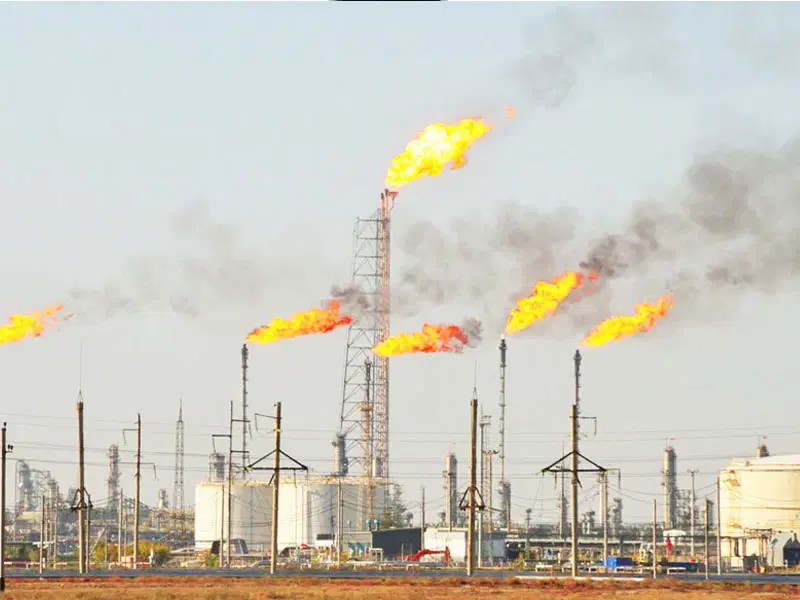
Nigeria’s drive to become a gas-powered economy by 2030 is facing renewed pressure as gas flaring losses cost the country an estimated 3,100 gigawatt-hours (GWh) of electricity generation potential in May 2026, highlighting persistent challenges in the nation’s energy sector.
Fresh data released by the Nigerian Upstream Petroleum Regulatory Commission (NUPRC) and the National Oil Spill Detection and Response Agency (NOSDRA) revealed differing estimates of the volume of gas flared during the month.
While the NUPRC reported 17.6 million standard cubic feet (MMSCF) of gas flared, NOSDRA placed the figure significantly higher at 30.7 million standard cubic feet (MSCF). Despite the discrepancy, both reports underscore the continued scale of gas flaring across Nigeria’s oil industry.
According to NOSDRA’s latest report, the gas flared during May had an estimated market value of $107.5 million. The agency also disclosed that defaulting oil companies, including several international oil firms, could face penalties amounting to $61.4 million for violating gas flaring regulations.
NOSDRA further reported that onshore operations accounted for the bulk of the flaring activities, with 22.3 MSCF flared on land compared to 8.4 MSCF recorded from offshore operations, representing a 62.3 per cent increase in onshore flaring. Beyond the financial losses, the agency estimated that the flared gas released approximately 1.6 million tonnes of carbon dioxide emissions, adding to environmental concerns linked to the decades-long practice.
NOSDRA noted that gas flaring has persisted in Nigeria since the 1950s despite repeated efforts by successive governments to eliminate the practice. The continued release of carbon dioxide and other harmful gases has remained a major environmental challenge, even as Nigeria seeks to balance energy production with climate commitments.
The Federal Government has repeatedly promoted its “Decade of Gas” initiative, launched in 2021, as the foundation for transforming Nigeria into a gas-driven economy by 2030.
The strategy focuses on expanding gas utilisation for electricity generation, industrial development and exports while encouraging investment across the gas value chain. However, industry findings indicate that although investment in the sector has increased, gas flaring losses remain high, suggesting that additional funding has yet to produce corresponding improvements in gas utilisation and production efficiency.
Industry checks also show that Nigeria’s struggle to consistently generate more than 4,000 megawatts (MW) of electricity is partly linked to inadequate gas supply to Electricity Generation Companies (GenCos). The persistent flaring of natural gas continues to deprive the power sector of a valuable energy source capable of boosting electricity generation across the country.
Meanwhile, the Renevlyn Development Initiative (RDI) has urged the Federal Government to impose a complete ban on gas flaring. The organisation argued that many oil companies operating in the Niger Delta now consider regulatory fines a routine cost of business rather than an incentive to eliminate the practice.
RDI cited data from the Nigerian Oil Spill Monitor, covering March 2012 to 2025, showing that oil companies paid an estimated $646 million in gas flaring penalties in 2025 alone—the highest amount recorded within the past five years. The group maintained that stronger enforcement measures are necessary if Nigeria hopes to achieve its energy transition goals while improving electricity supply and reducing environmental damage.