

FirstBank has called for stronger ethical standards among businesses operating within Nigeria’s informal sector, saying responsible conduct is essential to sustainable economic growth.
The bank made the call at the inaugural lecture of the Samuel Asabia Professorial Chair in Business Ethics, held at the University of Lagos on Thursday, September 3, 2026.
The lecture, themed “The Paradox of Business Ethics for Sustainable Enterprises in the Informal Sector of Nigeria’s Economy,” examined the challenges of promoting ethical conduct among businesses operating outside formal structures.
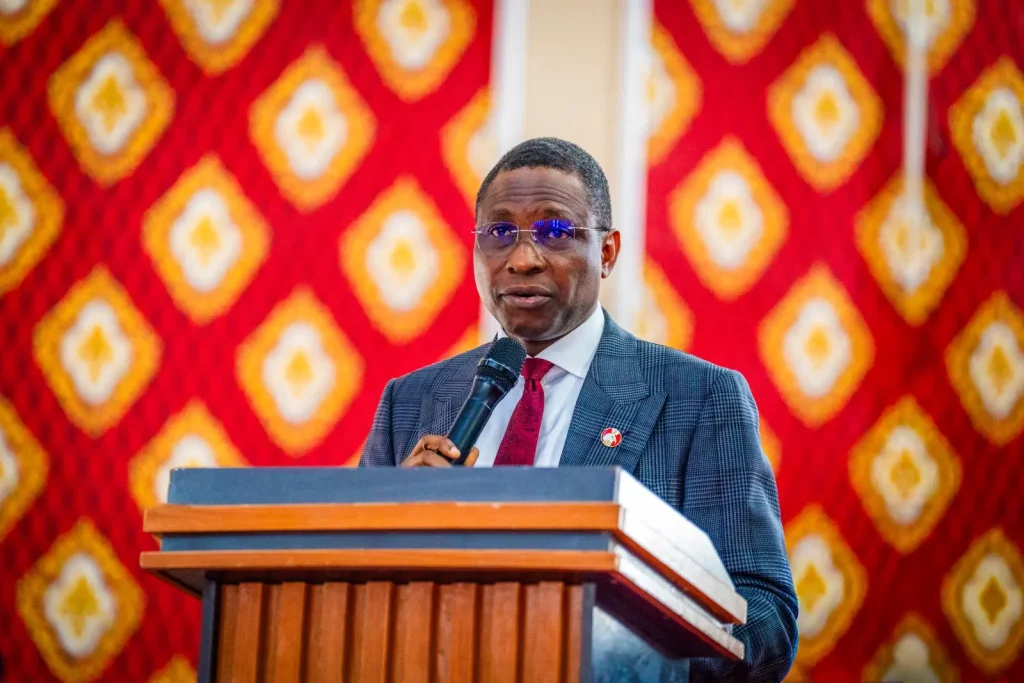
Managing Director and Chief Executive Officer of FirstBank Group, Olusegun Alebiosu, who chaired the occasion, said the subject was particularly relevant because of the informal sector’s contribution to Nigeria’s economy.
Alebiosu noted that traders, artisans, farmers and small business owners provide employment, livelihoods and entrepreneurial opportunities for millions of Nigerians.
However, he said many informal enterprises operate with limited access to financing, infrastructure, capacity and formal business structures.
According to him, the sector contributes approximately 42.5 per cent to Nigeria’s Gross Domestic Product, based on National Bureau of Statistics data.
He said informal businesses often depend heavily on reputation and trust, with relationships between traders, customers and suppliers sometimes serving functions that formal contracts would ordinarily perform.
Alebiosu questioned how ethical practices could be promoted among businesses primarily concerned with survival without creating additional pressures that could undermine their sustainability.
He said the issue would be explored further through the research and teaching of Professor Kenneth Amaeshi, who occupies the Samuel Asabia Professorial Chair.
The FirstBank chief executive maintained that ethics and sustainability should complement rather than compete with each other.
“At FirstBank, we believe that ethics and sustainability should not be viewed as competing priorities but rather that ethical business is sustainable business,” he said.
He identified education, health, diversity and financial inclusion, alongside responsible lending, procurement and climate initiatives, as areas underpinning the bank’s approach.
Alebiosu disclosed that FirstBank had equipped more than one million students with financial literacy skills and screened over 340 corporate transactions for environmental, social and governance risks in 2025.
He added that more than N45 billion was disbursed in 2025 through gender-responsive financing to women and women-led businesses.
Delivering the lecture, Amaeshi examined ethical challenges facing small businesses and the informal economy, with particular attention to tax compliance and accountability.
He highlighted the potential benefits of tax compliance to economic growth while also examining the consequences that can arise when governments fail to demonstrate accountability in taxation.