

The Federal Government is moving to make practical agriculture training the dominant feature of agricultural education in Nigeria’s polytechnics and colleges of education. Under the planned curriculum overhaul, practical work will account for 80 per cent of agricultural training, while theoretical instruction will make up the remaining 20 per cent.
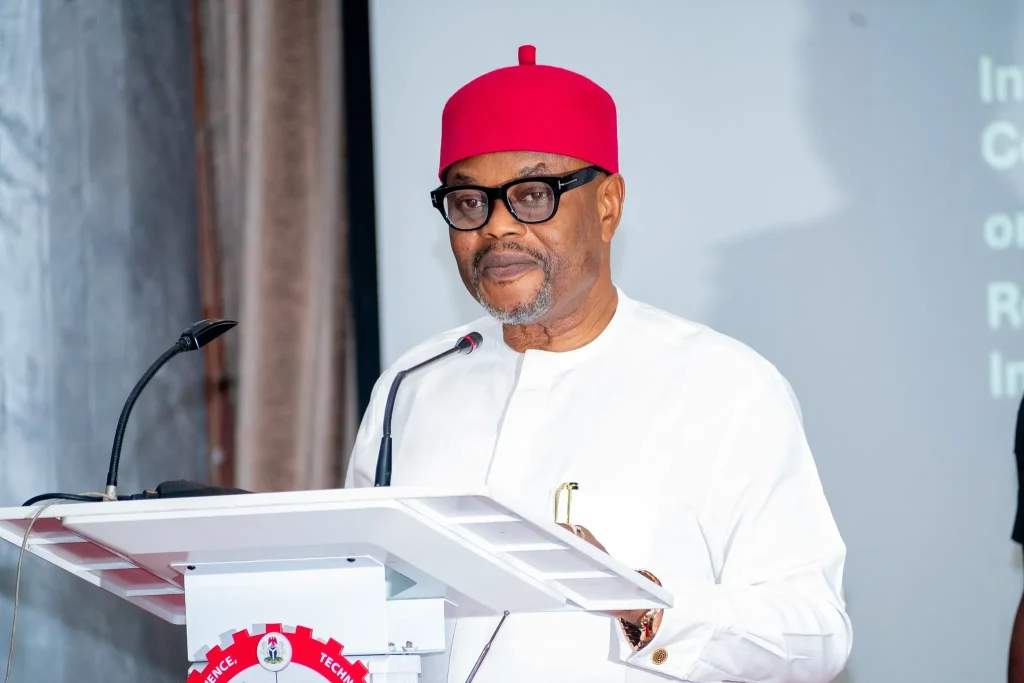
The Minister of Education, Dr Tunji Alausa, disclosed this on Thursday while receiving the report of the committee responsible for reviewing agriculture curricula for polytechnics and colleges of education. Alausa said the reform was designed to move agricultural education away from classroom theory and towards skills capable of creating jobs, improving productivity and opening new economic opportunities.
The minister described the shift from the previous 70 per cent theoretical and 30 per cent practical structure to an 80 per cent practical model as a major development in the Federal Government’s skills agenda. He said students should leave school with more than certificates. According to him, graduates should possess competencies they can immediately apply in farming, agro-processing, agribusiness and other segments of the agricultural value chain.
“The ultimate objective is to ensure that young Nigerians acquire practical skills that can be applied beyond the classroom,” Alausa said.
He explained that the reform was intended to close the gap between what students learn in classrooms and the skills demanded by the labour market. Agriculture, he added, should increasingly be viewed as a productive, skills-driven industry rather than simply an academic discipline.
Alausa said the reviewed curricula and national occupational standards would give young Nigerians technical skills needed to participate more effectively in the agricultural economy. He, however, cautioned that changing the curriculum would not be enough without proper implementation. The minister called for extensive sensitisation involving industry players, academics, teachers and other stakeholders.
He also stressed the importance of training teachers and providing appropriate facilities and institutional support. According to him, schools must have the capacity and equipment required to deliver the new practical-oriented curriculum effectively.
Earlier, the Minister of State for Education, Prof. Suwaiba Sa’id Ahmad, commended members of the review committee for their work. She said the exercise involved the National Board for Technical Education, NBTE, the Skills Council, industry representatives and academics. Ahmad said the collaboration helped ensure that the reviewed curricula reflected the skills and realities of Nigeria’s agricultural sector.
She expressed optimism that the reforms would strengthen agricultural productivity and skills development. The minister also urged stakeholders to support implementation and help educate the public about the increased practical component.
Presenting the committee’s report, the Executive Secretary of NBTE, Prof. Idris Muhammad Bugaje, said the exercise produced 36 new and reviewed National Diploma and Higher National Diploma curricula. It also produced three National Certificate in Education curricula and 31 National Occupational Standards. Bugaje said 27 of the occupational standards were developed from scratch, while four existing standards were reviewed.
According to him, the assignment had been completed, with the resulting documents considered and approved by the relevant regulatory bodies. He said the full set of reviewed curricula would be formally unveiled at a later public event.
Alausa assured Nigerians that the Education Ministry would continue working with NBTE, educational institutions, industry players and other stakeholders to ensure the reforms translate into actual training. The minister said the government’s objective was to ensure that policy documents do not remain on paper but become practical programmes in classrooms and training centres.
The practical agriculture training initiative is expected to strengthen the agricultural workforce while giving Nigerian youths market-relevant skills that can support employment, entrepreneurship and productivity. Alausa said the reform formed part of the Federal Government’s broader effort under the Renewed Hope Agenda to turn Nigeria’s agricultural potential into productive economic opportunities.