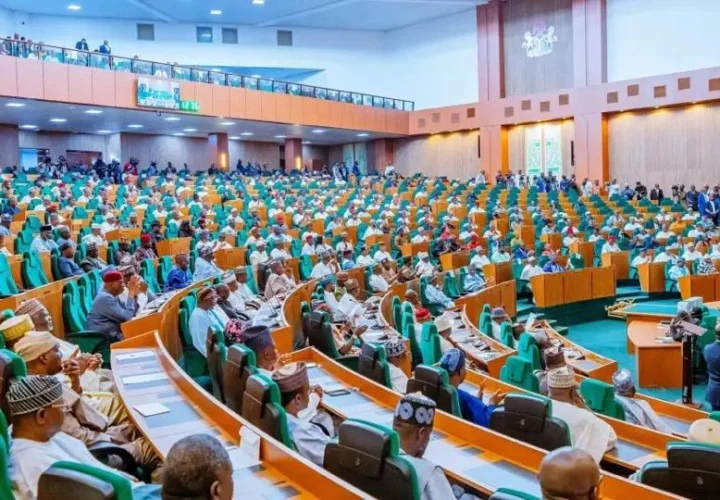


The Socio-Economic Rights and Accountability Project (SERAP) has called on the leadership of the National Assembly to disclose documents relating to the PFIPC budget allocation of more than ₦1.3 billion in the 2026 Appropriation Act and launch a formal investigation into how the funds were approved for a body the Presidency has described as non-existent.
In a Freedom of Information (FoI) request dated July 4, 2026, SERAP urged Senate President Godswill Akpabio and Speaker of the House of Representatives Tajudeen Abbas to release certified records surrounding the appropriation and clarify the legislative process that led to the allocation.
The organisation requested certified copies of all documents connected to the consideration and approval of the ₦1,302,978,784 allocated to the Presidential Foreign Intervention Promotion Council (PFIPC)/Presidential Economic Advisory Council in the 2026 budget.
SERAP also urged the National Assembly leadership to invoke its constitutional oversight powers under Sections 88 and 89 of the 1999 Constitution to investigate the circumstances surrounding the PFIPC budget allocation and identify anyone responsible for any irregularities. According to the organisation, Nigerians deserve a full explanation of how the appropriation was processed.
SERAP further requested certified records identifying: members of the National Assembly committees that considered the allocation, public officials or representatives who appeared before the committees to defend the proposed funding, the official designations of those involved in the budget defence.
The organisation also asked lawmakers to clarify whether the allocation formed part of the Executive’s original Appropriation Bill or whether it was introduced or amended during the legislative process. In addition, SERAP requested information on whether any legislator questioned the legal status, establishment or operational mandate of the council and what action, if any, was taken in response.
According to SERAP, the request follows reports that the Presidential Foreign Intervention Promotion Council (PFIPC)/Presidential Economic Advisory Council received more than ₦1.3 billion in the 2026 Appropriation Act.
However, the Presidency has publicly maintained that the body was never established by the Federal Government and does not exist. The organisation said the conflicting accounts raise serious concerns regarding: the integrity of Nigeria’s appropriations process, legislative oversight, public financial management, accountability in the use of public funds.
The FoI request, signed by SERAP Deputy Director Kolawole Oluwadare, argued that lawmakers have a constitutional duty to thoroughly scrutinise budget proposals before approving public expenditure.
According to the organisation: “Nobody has a more sacred obligation to obey the law than those who make the law.”
SERAP added that the National Assembly is expected to keep the Executive accountable by carefully examining all proposed expenditures before authorising them. The organisation stated that the Constitution places significant responsibilities on the legislature during the appropriation process, requiring lawmakers to debate, scrutinise and authorise spending in accordance with constitutional provisions.
SERAP said Nigerians have a right to know whether public funds were appropriated for an entity that was not lawfully established and how such an allocation occurred. The organisation requested that the National Assembly respond within seven days of receiving or publishing the letter. It warned that failure to comply would lead to legal action to compel disclosure in the public interest.
According to SERAP, releasing the requested records would strengthen public confidence in the National Assembly, improve transparency in the management of public resources and enable citizens to assess whether lawmakers fulfilled their constitutional oversight responsibilities during the PFIPC budget allocation process.
The organisation argued that its request is supported by the Freedom of Information Act, the 1999 Constitution, and Nigeria’s international legal obligations. It referenced Article 19 of the International Covenant on Civil and Political Rights, which guarantees access to information held by public institutions, and Article 9 of the African Charter on Human and Peoples’ Rights, which promotes maximum disclosure of information by public authorities.
SERAP also cited the internationally recognised Tshwane Principles on National Security and the Right to Information, noting that public institutions should not be exempt from disclosure obligations where allegations involve corruption, abuse of office or the use of public funds. According to the organisation, disclosure of the requested information would promote openness, strengthen legislative accountability and enhance public confidence in Nigeria’s budgetary process.