
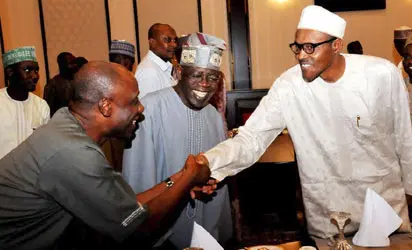
The Buhari presidency election has become the subject of renewed political dispute following comments by former Minister of Transportation, Rotimi Amaechi, who insisted that he played a significant role in Muhammadu Buhari’s 2015 electoral victory. Amaechi made the remarks while responding to claims circulating within political circles about contributions made during the election period. The Buhari presidency election has since reignited discussions among key actors involved in the All Progressives Congress (APC) coalition that defeated former President Goodluck Jonathan.
The 2015 general election remains one of the most significant political events in Nigeria’s democratic history. It resulted in the first opposition victory over an incumbent president since the return to civilian rule in 1999.
Muhammadu Buhari, representing the APC, defeated then-President Goodluck Jonathan of the Peoples Democratic Party (PDP) after a highly competitive campaign. The election was preceded by the formation of the APC through a merger of major opposition parties, including factions from the Congress for Progressive Change (CPC), Action Congress of Nigeria (ACN), and All Nigeria Peoples Party (ANPP).
The Buhari presidency election period was marked by extensive coalition-building, regional political negotiations, and coordinated campaign strategies across party structures. Multiple political actors held leadership roles in mobilising support, fundraising, and campaign organisation.
Amaechi, who was one of the prominent figures in the APC during the 2015 election cycle, stated that he actively participated in political mobilisation efforts that contributed to Buhari’s emergence as president.
He referenced his involvement in campaign activities during the Buhari presidency election, particularly in coordinating support structures and political engagements that strengthened the opposition campaign at the time. The former minister’s comments came amid renewed political exchanges involving interpretations of who played key roles in the 2015 victory. The Buhari presidency election narrative has continued to generate differing accounts among individuals who were part of the APC coalition.
Political observers note that such disputes are not uncommon in coalition-based victories, where multiple actors contribute to campaign success but later disagree on the extent of individual influence. Amaechi maintained that his participation was central to the strategic mobilisation efforts that shaped the outcome of the former president election, reinforcing his long-standing position on his political role during that period.
The renewed debate around the Buhari presidency election highlights continuing tensions over political credit and legacy within Nigeria’s ruling party structure. Such disagreements often reflect broader struggles over influence, recognition, and historical narrative within coalition governments.
Analysts say revisiting contributions from past elections can affect present-day political alignment and internal party dynamics. The Buhari presidency election remains a reference point in ongoing discussions about party formation, loyalty, and leadership recognition. The exchange also underscores how historical electoral events continue to shape political relationships years after the conclusion of the election cycle.