
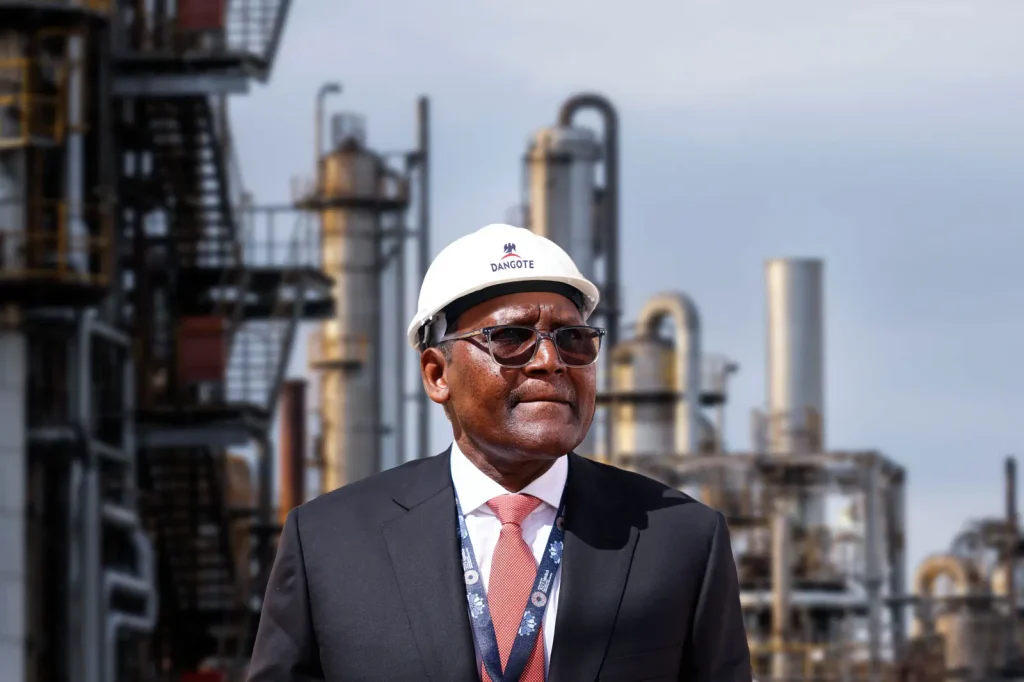
Africa’s richest businessman, Aliko Dangote, has officially activated the Olokola seaport plan in Ogun State, marking a renewed push to develop a major deep-sea port within the Olokola Free Trade Zone. The development forms part of his broader industrial expansion strategy aimed at strengthening export capacity and integrating logistics operations linked to his refinery, fertiliser, and petrochemical investments in Nigeria’s southwest region.
The Olokola Free Trade Zone, located in Ogun Waterside Local Government Area, has long been identified as a strategic location for maritime infrastructure due to its proximity to existing industrial hubs and access to Atlantic trade routes. The area was previously considered for major industrial projects, including refinery and port developments, before earlier plans were suspended due to regulatory and operational challenges.
The renewed Olokola seaport plan comes amid increasing national focus on expanding Nigeria’s port capacity to reduce congestion in Lagos ports and enhance export efficiency. Government approvals for the Ogun deep-sea port project were earlier announced as part of broader infrastructure expansion policies aimed at improving trade logistics.
Reports indicate that Dangote and his team have commenced formal engagement processes, including site assessments, community consultations, and technical evaluations across Ogun Waterside and adjoining coastal communities. These engagements are part of preparatory steps for the proposed deep-sea port development.
The Olokola seaport plan is designed as an integrated logistics hub that will support export operations for petroleum products, fertiliser, and petrochemicals produced within Dangote’s industrial ecosystem. It is also expected to facilitate importation of heavy industrial equipment required for ongoing manufacturing and energy operations.
Project representatives have previously stated that the port will serve as a logistics backbone for the Dangote industrial network, linking production facilities with global shipping routes. The design includes capacity for large-scale maritime trade operations, positioning it as a competitive alternative to existing ports in Lagos and other coastal hubs.
Community stakeholders in Ogun and neighbouring Ondo State have reportedly expressed support for the project during initial consultations. Traditional rulers and local leaders have welcomed the proposed development, citing potential job creation and economic opportunities for host communities.
The Olokola seaport plan also aligns with broader industrial integration strategies that include Dangote’s refinery operations in Lagos and fertiliser production facilities in Ogun State. These interconnected assets are expected to benefit from improved export efficiency once the port becomes operational.
Industry analysts note that the project reflects a long-term investment strategy aimed at strengthening Nigeria’s position in regional and global trade, particularly under the African Continental Free Trade Area framework.
Economists say the project could significantly reshape Nigeria’s maritime logistics landscape by reducing pressure on existing ports and improving export turnaround time. It may also enhance foreign exchange inflows by supporting higher export volumes from industrial production zones.
However, experts also note that successful implementation of the Olokola seaport plan will depend on regulatory approvals, infrastructure coordination, and sustained stakeholder engagement across federal, state, and local levels.