

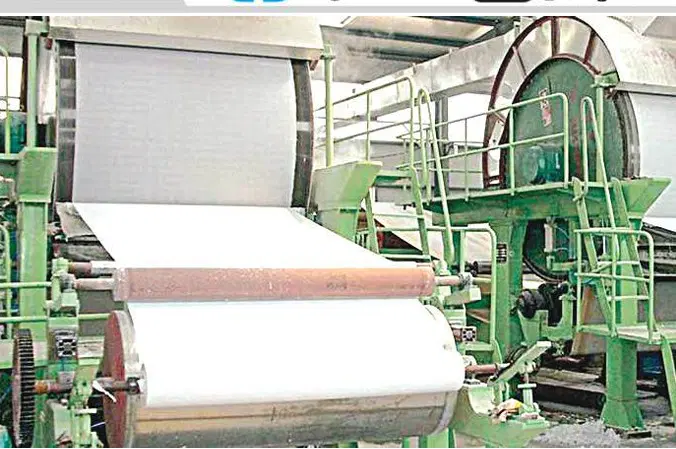
Paper mills collapse is costing Nigeria an estimated ₦674 billion annually as the country increasingly depends on foreign producers following the shutdown of domestic paper manufacturing facilities. The paper mills collapse reflects a long-term decline in local industrial capacity, with major production plants remaining inactive for over two decades.
Nigeria once operated functional paper manufacturing facilities, including the Nigeria Paper Mill in Jebba, the Nigerian Newsprint Manufacturing Company in Oku-Iboku, and the Nigerian National Paper Manufacturing Company in Iwopin.
These mills were established to support local demand for paper, packaging, and publishing materials. However, over time, operational challenges, privatisation issues, and infrastructure constraints led to their decline and eventual shutdown. Industry stakeholders have consistently highlighted the consequences of this decline, particularly the country’s growing reliance on imported paper products.
Available data indicates that paper mills collapse has resulted in Nigeria losing about ₦674 billion annually to foreign producers, as local primary production has remained inactive for approximately 26 years.
The absence of functional paper mills has forced industries such as publishing, packaging, and manufacturing to depend heavily on imported paper and related materials. Earlier industry assessments showed that Nigeria’s paper sector had already become import-dependent years after privatisation, with stakeholders noting that domestic production capacity had significantly declined.
Experts have also linked the collapse to multiple structural challenges, including lack of raw materials, inadequate power supply, and limited investment in modern production technology. Additionally, concerns have been raised about the failure of previous rehabilitation and privatisation efforts, which did not result in sustained production or revival of the mills.
The paper mills collapse has significant economic implications, including sustained capital outflow, loss of local jobs, and weakened industrial capacity. Dependence on imported paper products exposes the economy to foreign exchange pressures, particularly in periods of currency volatility.
The development also affects sectors such as education, media, and manufacturing, where paper remains a critical input. For policymakers, the situation highlights broader challenges in industrial revitalisation and the need for coordinated strategies to rebuild local production capacity.