

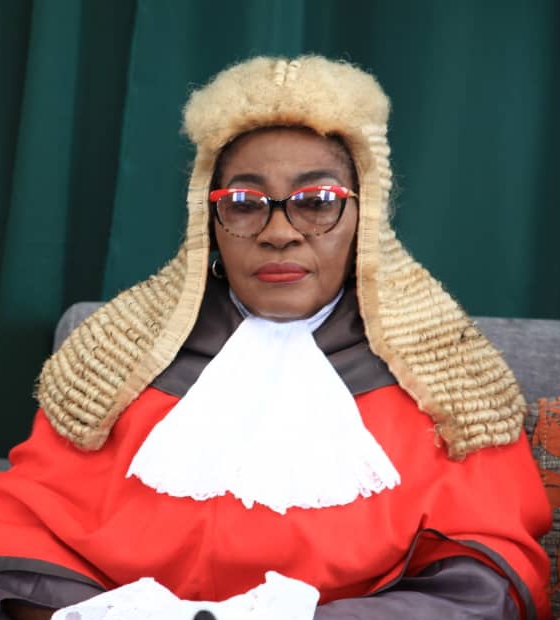
The Akwa Ibom State judiciary has intensified efforts to address prison congestion and justice delays, as Chief Judge Ekaete Fabian-Obot ordered the release of 63 inmates from the Uyo Custodial Centre.
The development forms part of a broader correctional system review aimed at improving justice delivery and decongesting facilities across the state.
The exercise brings the total number of inmates released during the inspection to 100.
Correctional facilities across Nigeria, especially in urban and semi-urban centres, continue to face challenges linked to overcrowding, delayed trials, and administrative inefficiencies.
In Akwa Ibom State, routine inspections by the judiciary have become a key intervention to address these systemic issues.
The Chief Judge’s statewide inspection covered multiple custodial centres, including Ikot Abasi, Eket, and Ikot Ekpene, where 37 inmates were earlier released.
The latest exercise at the Uyo facility concludes the inspection cycle and highlights ongoing institutional efforts to reform detention practices and uphold constitutional rights.
The release of the 63 inmates followed a comprehensive review of case files involving collaboration between the Director of Public Prosecution, court clerks, and medical personnel.
Authorities stated that 24 inmates were discharged on special grounds, while 39 others were granted pardon on compassionate grounds.
Cases considered included missing files, questionable charges, and lack of diligent prosecution. Among those released were 20 inmates suffering from serious health conditions.
One inmate, identified as Godwin Francis Etim, who is battling tuberculosis, was referred to the Infectious Disease Hospital in Ikot Ekpene for treatment.
A pregnant inmate in her final trimester was also released due to medical complications beyond the capacity of the custodial facility.
Another case involved Magdalene Bassey Edet, who had been convicted by two courts for related offences.
Despite completing a 10-year sentence, she was serving an additional two-year term. After reviewing her conduct, the court ordered her release on probation, requiring her to report every three months.
“I urge all you pardoned today to maintain good conduct and not to indulge in criminal activities that will bring you back here again,” the Chief Judge said.
The review also uncovered cases of wrongful detention, including an inmate held in place of her husband after reporting an assault. Some cases stalled due to missing files linked to a prosecutor’s prolonged absence.
The exercise reflects a growing focus on justice reform and correctional system efficiency in Nigeria’s states.
For urban centres, where custodial facilities are often overstretched, such interventions help reduce operational pressure and improve inmate welfare.
For legal institutions and policymakers, the findings highlight persistent gaps in case management, prosecution processes, and law enforcement accountability.
Entrepreneurs and professionals in legal services and justice-tech sectors may find opportunities to develop solutions that streamline case tracking and reduce delays.
The development also reinforces the importance of routine judicial oversight in maintaining fairness and preventing prolonged detention without trial.