
Nigeria’s manufacturing sector has seen an increase in employment over the past two decades while productivity per worker has lagged, Vanguard News reported on Monday. The trend highlights a divergence between job creation and value output in the industry.
According to data cited in the report, manufacturing employment in Nigeria grew from about 9 per cent in the early 2000s to roughly 14 per cent in 2023.
The figures are drawn from statistics compiled by the United Nations Industrial Development Organization (UNIDO), World Bank national accounts and International Labour Organisation (ILO) employment statistics.
At the same time, Manufacturing Value Added (MVA) per worker, a key measure of productivity, has not shown corresponding gains, the report said.
The data indicate that productivity per worker declined after the late 1990s, rose again around 2014, and then fell, reaching about $224 in 2024, according to the same comparison.
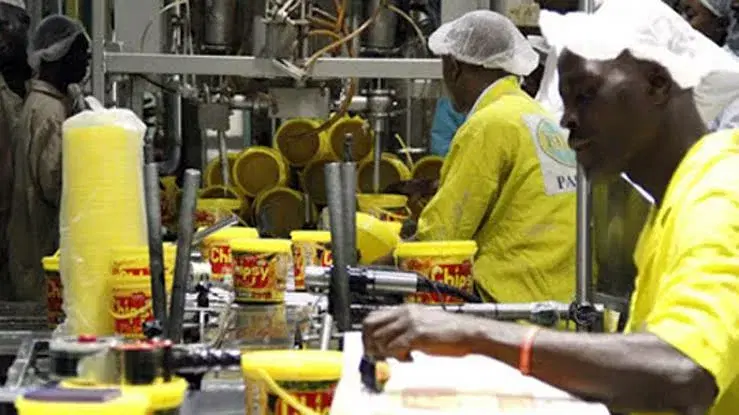
The report said much of the employment growth occurred in micro and small-scale enterprises, including activities such as food processing, textiles, furniture and leather production, where firms are often labour-intensive and operate with limited modern machinery or capital investment.
It also noted that constraints such as weak value-chain integration, limited access to finance, inadequate infrastructure and high energy costs continue to shape Nigeria’s manufacturing landscape and remain factors in relatively low productivity levels across the sector.
The Vanguard report contrasted Nigeria’s productivity levels with other emerging economies.
It stated that in 2023, India’s MVA per worker was about $1,811, Indonesia’s was $804, and South Africa’s was $1,805, levels that the report said were achieved alongside expanding employment in those countries.
Nigeria’s manufacturing sector has been a focus of policy discourse as the government and industry stakeholders seek to boost industrialisation, increase contributions to gross domestic product (GDP) and expand employment opportunities.
Other reports show broader efforts to strengthen manufacturing output, enhance competitiveness and attract investment to the sector.