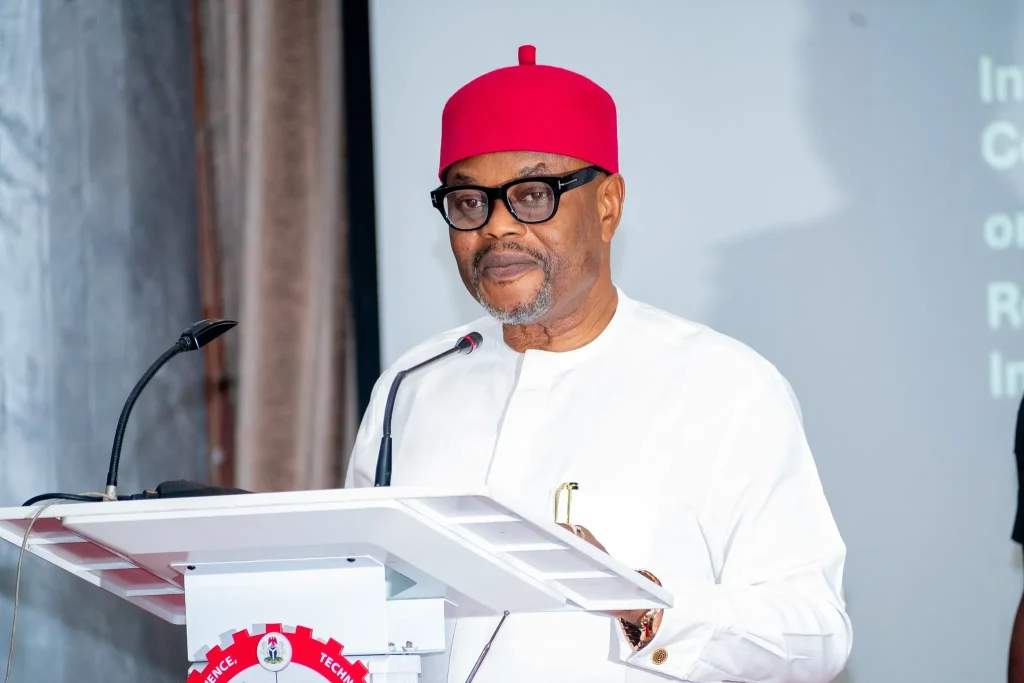


Nigeria’s economy must move beyond dependence on raw material exports to embrace innovation and complex products, the Chairman of the Nigeria Revenue Service (NRS), Zacch Adedeji, has said.
Adedeji made the remarks on Thursday at the maiden Distinguished Personality Lecture of the Faculty of Administration, Obafemi Awolowo University. The lecture was titled “From Potential to Prosperity: Export-led Economy”.
Nigeria’s economy has long relied on crude oil and other unprocessed exports for foreign exchange and government revenue.
Despite policies aimed at diversification, industrial production and export variety have remained limited. This has positioned Nigeria poorly in a global economy that rewards technological advancement and complex products.
Adedeji cited findings showing that Nigeria added only six new products to its export basket between 2008 and 2023. He said this reflects stagnation in export diversification and weak productive capabilities.
Adedeji said Nigeria’s current economic structure hampers its ability to compete globally. He described the economy as paradoxical, with a high-tech oil and gas sector juxtaposed against a low-productivity informal sector.
He said, “A paradigm shift for Nigeria is needed to move dependence on raw material exports to one that embraces ideas, innovation and the production of complex products as a pathway to sustainable economic growth and national prosperity.”
Adedeji also noted that Nigeria’s existing capabilities offer limited opportunities for export diversification. He referenced the Harvard Atlas of Economic Complexity in making this point.
He urged Nigeria to study the experiences of countries such as Vietnam, Indonesia, Bangladesh, Brazil and South Africa, where deliberate strategies enhanced export complexity.
Adedeji highlighted that while some peer nations integrated into global value chains, Nigeria remained primarily a supplier of raw materials. He said this has constrained job creation and value addition.
According to his media adviser, Dare Adekanmbi, Adedeji said President Bola Tinubu has begun efforts to rebuild the economy to foster innovation, productivity and resilience.
However, he was quoted as stressing that long-term structural transformation requires a shift in export focus.
Recent government initiatives, including a policy to require at least 30 per cent value addition to raw materials before export, align with efforts to boost local processing and industrial growth. This policy is designed to encourage manufacturing and reduce reliance on unprocessed exports.
Adedeji’s remarks underscore a growing consensus that Nigeria’s economic model must evolve. A focus on complex goods and local value addition is seen as key to creating jobs and enhancing global competitiveness.
The transition may also support broader industrial policy goals, such as reducing import dependency and strengthening manufacturing.