

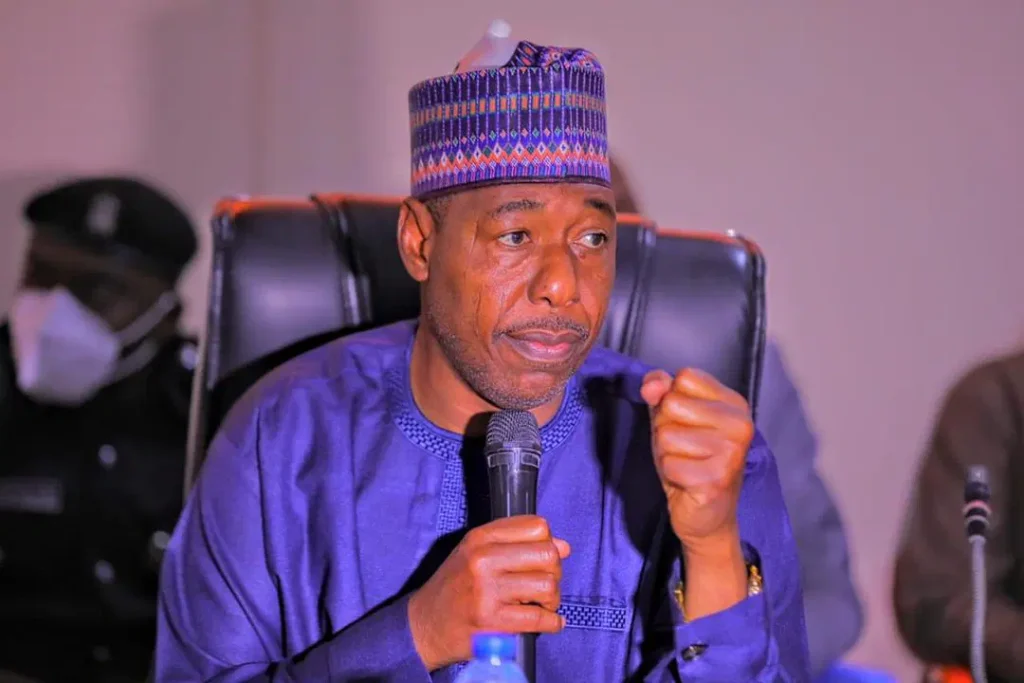
Governor Babagana Zulum of Borno State has publicly appealed to residents for forgiveness and continued support as the state continues to confront persistent security challenges that have affected lives and livelihoods across the region.
In a statement delivered at a recent community gathering in Maiduguri, Zulum acknowledged the difficulties experienced by families who lost loved ones, were displaced, or suffered economic disruptions due to ongoing insurgent activity. He called for unity and patience as government and security forces work to stabilise affected communities, rebuild infrastructure, and restore normalcy.
Borno State has been at the centre of counter‑insurgency operations for over a decade. While significant military gains have been made against violent groups, communities continue to feel the impact of attacks, movements of displaced persons, and the broader socio‑economic disruptions that accompany insecurity. That reality has tested relations between citizens, local leadership, and national authorities responsible for security strategy and humanitarian response.
Zulum said that the government remains committed to reinforcing community protection through coordinated efforts with national security agencies and local vigilante groups, while expanding rehabilitation and support programmes for survivors. He emphasised the need for collective resolve and cooperation to outpace threats that have adapted tactics and continued to undermine stability in rural and peri‑urban areas.
Speaking to a crowd that included youth groups, market associations, and community leaders, the governor outlined steps his administration is taking to improve communication between government and residents, enhance emergency response, and support economic opportunities for young people affected by insecurity. He highlighted partnerships with federal institutions and civil society organisations aimed at expanding job training, educational access, and youth entrepreneurship schemes.
Youth voices in Borno have expressed mixed responses to Zulum’s appeal. Some emphasised that trust must be earned through tangible improvements in security and public services. Others welcomed the gesture as an important step in fostering healing and a sense of shared destiny.
Security analysts say that leadership messaging plays a role in stabilising communities, but must be matched with operational outcomes that protect lives, reduce violence, and create visible signs of recovery. Community cooperation with security forces, they add, enhances local intelligence gathering and supports targeted interventions that reduce risk.
The appeal comes as displaced persons continue to return to towns and villages previously abandoned due to attacks. Internally displaced persons (IDPs) and returnees face challenges in accessing food, shelter, education, and healthcare. Humanitarian partners continue to work with state agencies to address these needs, even as resources remain stretched.
Zulum’s comments also touched on national support structures, noting that coordination with federal ministries, donor agencies, and neighbouring states has been crucial to managing relief efforts and rebuilding programmes. He reiterated calls for sustained investment in infrastructure, youth development, and institutional capacity in states most affected by insecurity.
For young people whose formative years have been marked by uncertainty, access to educational opportunities, economic participation, and community safety remain high priorities. Strengthening local institutions in ways that deliver on these priorities is essential to sustaining long‑term development and healing.
The governor concluded his appeal by expressing confidence in the resilience of Borno’s residents, especially youth leaders and community advocates who have sustained local initiatives focused on peacebuilding, economic empowerment, and social cohesion. He urged citizens to remain engaged, informed, and hopeful as recovery efforts evolve.
The government’s next steps, observers say, will be judged not only by improvements in security but by how effectively solutions translate into safer streets, functioning schools, and meaningful opportunities for young people and families across the state.