
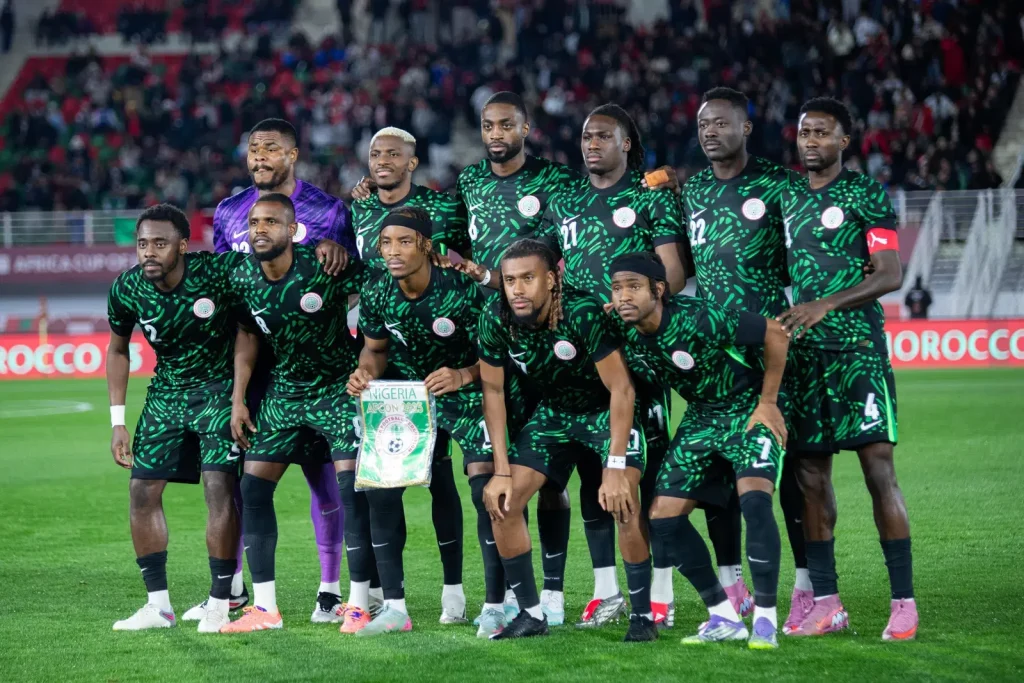
Nigeria’s national football team has released its starting lineup for the international friendly against Uganda, with goalkeeper Francis Uzoho and midfielder Raphael Onyedika named in the first eleven, while attacking stars Alex Iwobi and Ademola Lookman were listed among the substitutes. The selection has drawn attention for what it suggests about tactical experimentation and squad depth ahead of upcoming competitive fixtures.
Team officials confirmed that the match is part of a broader assessment programme aimed at testing combinations, fitness levels, and tactical balance. Friendly fixtures have increasingly become strategic tools rather than ceremonial outings, particularly as national teams manage congested calendars and evolving player availability.
The decision to start Uzoho points to continued confidence in his experience at international level, despite ongoing debates around competition for the goalkeeper position. His inclusion offers stability at the back while allowing coaching staff to observe defensive coordination under match conditions.
Onyedika’s presence in midfield reflects a growing emphasis on energy, ball recovery, and transitional play. The midfielder has become a regular feature in national team selections, particularly for matches requiring high tempo and positional discipline. His role is expected to provide balance between defensive structure and forward progression.
The decision to bench Iwobi and Lookman has generated discussion among fans, especially younger supporters who closely follow player form across European leagues. Team sources indicated that the move was influenced by workload management and tactical objectives rather than form concerns. Rotating established players allows opportunities for emerging talents to gain minutes and experience.
For young Nigerian footballers watching from academies, campuses, and local pitches, the lineup sends a clear message about competition and opportunity. Friendly matches offer pathways for fringe players to stake claims and demonstrate readiness for higher stakes fixtures.
Sports analysts note that such selections also reflect modern squad management. National teams increasingly rely on wider pools of players to mitigate injury risk and maintain performance levels. Experimentation in non competitive fixtures is viewed as essential preparation for tournaments.
The match against Uganda also carries developmental significance. East African teams have made steady progress in recent years, offering competitive opposition that tests adaptability and tactical awareness. For Nigeria, the fixture provides insight into how different player combinations perform against varied playing styles.
Youth engagement with national team selection remains high, driven by social media analysis, fan debates, and fantasy sports culture. Lineup decisions influence conversations around merit, form, and opportunity, particularly among young supporters who see national team inclusion as validation of hard work and consistency.
Coaching staff have emphasized that selections are guided by performance data, training intensity, and strategic needs rather than public sentiment. This approach aligns with broader professional standards in international football management.
Beyond the immediate match, the lineup reflects Nigeria’s ongoing effort to balance experience with renewal. Integrating younger players while managing established stars is critical to sustaining competitiveness across multiple cycles.
As the friendly unfolds, attention will remain on how the selected players execute their roles and how substitutes are deployed. For fans and aspiring players alike, the match offers a glimpse into the evolving direction of the national team and the opportunities that structured rotation can create.