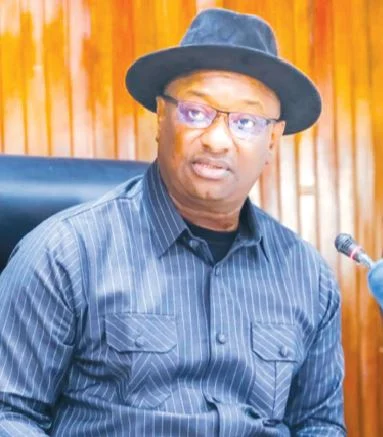


The Federal Government has clarified that indigenous languages have not been banned in Nigerian schools, the Minister of Education, Dr Tunji Alausa, said in an interview on Sunday.
He explained that recent policy changes adjust how languages are used in instruction to help students perform better in national examinations.
Alausa spoke on ARISE News to address public concerns after reports about a ban on indigenous languages spread online.
He said the government’s policy does not forbid indigenous languages, but it limits their use as the main medium of instruction, so students are better prepared for exams conducted in English.
He noted Nigeria’s multi-lingual society, with an estimated 646 languages, as a reason for the adjustment. “Now, we’ve not banned the use of indigenous language in school,” Alausa said.
“We’re proud of our languages,” and students will still have indigenous languages as subjects at all levels of basic and secondary education.
Alausa explained that the previous national language policy, which required local languages to be the main medium of instruction, was not being implemented consistently across the country.
In some regions, the policy extended beyond its original intent, with instruction in local languages continuing up to junior and senior secondary levels.
“People were using their mother tongue to teach up to Primary Six and even JSS, and now some are asking to teach up to SS3,” he said, noting that national exams such as WAEC, NECO and JAMB are conducted in English.
He said reverting to English as the primary language of instruction for most subjects will help standardise learning and improve outcomes.
The minister said students will still take one indigenous language as part of their curriculum in primary and secondary schools. He added that the changes aim to balance cultural pride with academic preparedness.
Some education experts and stakeholders have criticised the policy shift, saying it could reduce the use and development of local languages and cultural knowledge.
They argue that mother-tongue teaching supported early learning in other countries, and these perspectives have been raised publicly by groups and commentators.
The Bible Society of Nigeria and others have urged renewed support for indigenous languages, emphasising their role in cultural identity and communication.
Officials say the government will continue to monitor implementation and engage stakeholders on language policy in schools. Authorities encourage dialogue to address concerns while ensuring learners are well prepared academically.