

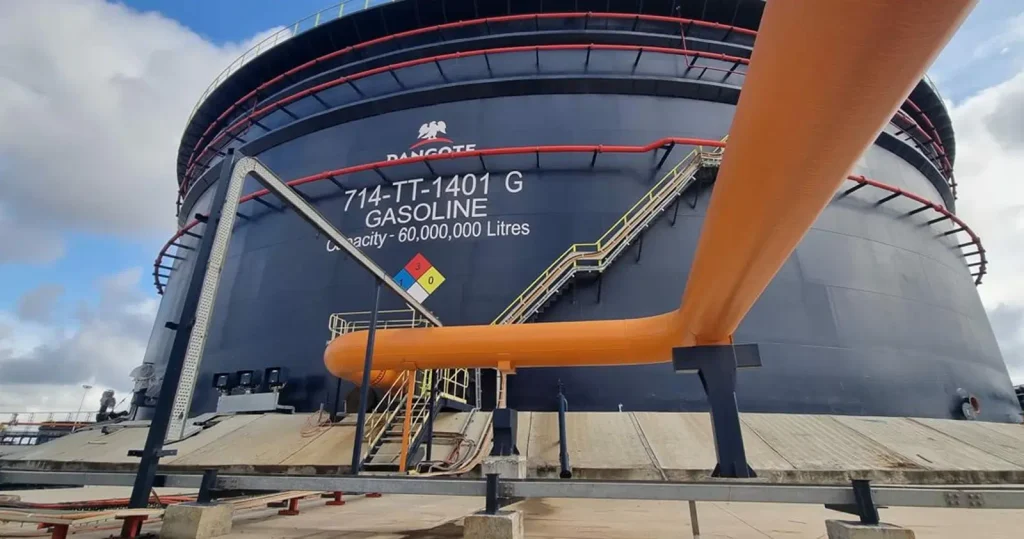
Dangote Petroleum Refinery has warned that continued reliance on coastal logistics for fuel distribution could increase the price of petrol in Nigeria, potentially pushing pump prices close to N1,000 per litre if marketers pass the extra cost to consumers.
The refinery made the warning in a statement on Thursday outlining its production and distribution operations. It said its preferred method of product evacuation remains direct gantry loading, which it stated is more cost efficient.
Dangote Refinery said its gantry facility at its Lekki site has 91 loading bays capable of handling up to 2,900 tankers daily. It said the facility can evacuate more than 50 million litres of petrol and 14 million litres of diesel each day through continuous operations.
In the statement, the refinery said gantry loading removes extra charges such as port fees, maritime levies and vessel-related costs that it said do not benefit end users.
The company said marketers are free to choose between gantry and coastal loading.
However, it cautioned that heavy use of coastal logistics could add approximately N75 per litre to petrol costs. If these added costs are transferred to consumers, the refinery said, pump prices for petrol could rise near N1,000 per litre.
Dangote Refinery noted that Nigeria’s average daily consumption of petrol is around 50 million litres of Premium Motor Spirit and 14 million litres of diesel.
The refinery estimated that widespread reliance on coastal logistics could impose additional annual costs of about N1.75 trillion, a burden it said would eventually affect consumers or suppliers.
The statement also addressed distribution efficiency and national energy security. The refinery said an expanded pipeline network linking refineries directly to depots could reduce distribution costs, improve supply reliability and support stability in fuel pricing.
Dangote Refinery reiterated its commitment to supplying affordable petroleum products and clarified that it does not import finished fuels.
The company said that while its Residue Fluid Catalytic Cracking Unit is undergoing maintenance, it only imports intermediate feedstock, a practice it said is consistent with global industry standards.
The statement highlighted the impact of domestic refining on fuel costs since the refinery began operations.
It noted that diesel prices have fallen from about N1,700 per litre to between N980 and N990, and petrol prices have dropped from around N1,250 to between N839 and N900, easing pressure on foreign exchange and contributing to relative naira stability.