
Political conflicts rooted in godfather-godson dynamics have intensified tensions in Kano and Rivers states, turning both states into arenas of political struggle, residents and political observers said.
The clashes have affected governance and daily life amid shifting alliances and power plays.
The unrest in both states reflects broader national questions about political mentorship in Nigeria and the consequences when established political patrons and their protégés fall into conflict.
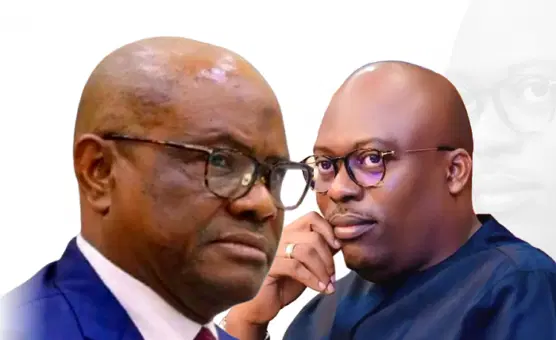
In Rivers State, tensions escalated after Governor Siminalayi Fubara began asserting greater independence from his political mentor, Barr Nyesom Wike, now Minister of the Federal Capital Territory.
What began as a succession arrangement fractured into a prolonged political standoff that slowed governance and divided the state’s ruling class.
The split led to institutional paralysis, factions within the Rivers State House of Assembly and stalled budgets that hindered the delivery of public services. Parallel authorities emerged, each claiming legitimacy, contributing to political instability and administrative gridlock.
Observers said the conflict widened existing cracks in the state’s political landscape, undermining trust and collaboration.
In Kano State, political tensions centred on the defection of Governor Abba Kabir Yusuf from the New Nigeria Peoples Party (NNPP) to the All-Progressives Congress (APC) in January 2026.
The move marked a dramatic rupture with his long-time political mentor, Senator Rabiu Musa Kwankwaso, who had been instrumental in Yusuf’s rise to power.
Former alliances dissolved as Yusuf aligned with opposing political forces, including figures once considered adversaries, reshaping party dynamics in the state. The defection deepened rivalries among political actors and heightened uncertainty among residents navigating shifting loyalties.
Analysts noted that the fallout in Kano has manifested not only in competing political narratives but in heightened public anxieties as families adjust routines and avoid perceived risk areas.
Political power struggles in both states have consequences that extend beyond strategy and ambition. Ordinary citizens, such as those living in Kano, describe anxiety as families adjust to the climate of uncertainty.
Community life, schooling and business routines have been disrupted by perceptions of tension and instability.
Public commentators and civic voices have highlighted the risks of extended godfather–protégé clashes. Some argue that evolving political identities and alliances may marginalise voter interests and shift focus from governance to survival politics.
The struggles in Kano and Rivers reflect broader trends in Nigerian politics where long-standing mentor–protégé relationships can unravel once power is secured. When protégés seek autonomy, the rupture may trigger institutional friction, stalled governance and shifts in political alliances.
Political analysts urge stronger institutional frameworks and internal party democracy to mitigate the destabilising effects of personalised patronage politics.
Political mentorship breakups in Kano and Rivers states have transformed local political landscapes into arenas of conflict and uncertainty. In both cases, ambitions for autonomy have clashed with established patronage networks, producing divisions that reverberate through governance institutions and everyday life for residents.