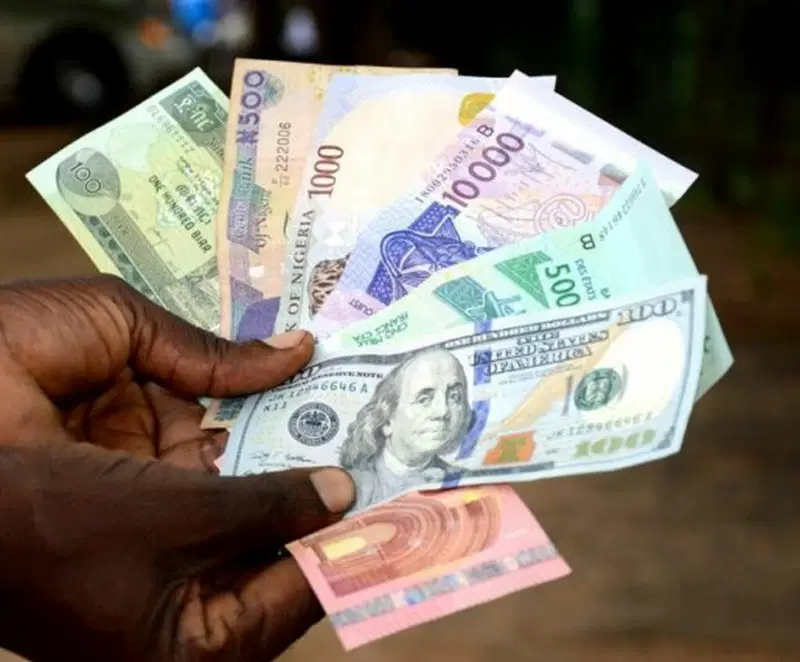


The Central Bank of Nigeria (CBN) says reforms to the foreign exchange market and the recapitalisation of commercial banks have strengthened the country’s financial system and improved economic stability.
CBN Deputy Governor, Corporate Services, Dr Muhammad Abdullahi, stated this on Tuesday at the 38th Seminar for Finance Correspondents and Business Editors Association of Nigeria (FICAN) in Abuja.
Speaking on the theme, “Towards a Robust and Resilient Financial System in the Banking Sector Recapitalisation Era,” Abdullahi said the reforms were introduced against the backdrop of significant economic challenges inherited by the current CBN leadership in 2023.
He said the measures were designed to restore stability, rebuild confidence and refocus the apex bank on its core mandate, while commending financial journalists for helping businesses, households and the public understand the implications of the reforms.
According to Abdullahi, Nigeria’s foreign exchange market was heavily administered and fragmented in 2023, with multiple official windows operating alongside a parallel market. He said the gap between official and parallel market exchange rates averaged more than 60 per cent in 2022 and exceeded 100 per cent at certain periods, making pricing and business planning difficult.
“The World Bank estimated that the implicit subsidy from the exchange-rate regime cost Nigeria about three per cent of GDP in 2022,” he said.
Abdullahi added that net usable foreign reserves stood at $859 million in the second quarter of 2023 after accounting for identified short-term obligations, while outstanding foreign exchange forward claims exceeded $7 billion.
He also said ways and means financing had reached N26.6 trillion by 2023, while legacy development finance exposures exceeded N10 trillion. According to him, the resulting liquidity pressures made inflation difficult to contain and weakened the transmission of monetary policy.
In response, the CBN consolidated existing foreign exchange windows in June 2023 and removed restrictions affecting 43 categories of imports. The bank also reviewed outstanding foreign exchange claims and settled valid claims worth more than $5 billion, while strengthening foreign exchange trading and reporting rules.
The deputy governor said the apex bank subsequently introduced an electronic foreign exchange matching system for interbank transactions and established the Nigeria FX Code, which provided clearer standards of conduct and sought to discourage speculative behaviour.
He said tighter monetary policy, improved liquidity management and the gradual reduction of development finance interventions were also part of the broader reform programme.
On banking recapitalisation, Abdullahi said the exercise announced in 2024 was aimed at creating stronger banks capable of supporting economic growth. He disclosed that 33 banks had met the revised minimum capital requirements and raised N4.65 trillion by the end of the two-year programme.
According to him, the reforms have contributed to greater stability in the foreign exchange market, with the average gap between official and parallel market rates falling from 68.2 per cent between January and May 2023 to less than two per cent currently.
He also reported that autonomous sources accounted for $7.3 billion of the $10.8 billion in foreign exchange inflows recorded in July, while remittances through international money transfer operators reached $950 million. Gross external reserves, he added, stood at $55.6 billion as of September 11.
Abdullahi said inflation, which peaked at 34.8 per cent in December 2024, had moderated to 15.43 per cent in July 2026, while real GDP grew by 4.43 per cent in the second quarter of 2026, driven largely by non-oil activities.
He, however, acknowledged that the improvements did not mean pressures on households and businesses had disappeared. He said the CBN’s focus was now on making the gains durable while deepening investment and foreign exchange sources.
The deputy governor said stronger bank capital would position financial institutions to finance infrastructure, industrial expansion and international trade, while also enabling them to absorb losses during periods of economic stress and invest in innovation and digital transformation.
He urged banks to strengthen corporate governance, internal controls and risk management alongside increased capital. He said risk management should cover credit, market, liquidity and operational risks, as well as cybersecurity and third-party dependencies.
Abdullahi said the CBN would continue monitoring governance, asset quality, liquidity and large exposures in the banking sector. Banks, he added, would also be expected to protect customer data, maintain reliable payment services and strengthen disaster recovery and business continuity systems.
He stressed that the benefits of recapitalisation should go beyond stronger balance sheets to improved services and productive lending, particularly in agriculture, manufacturing, services and infrastructure.
He also called for wider access to financial services for rural communities, women and young entrepreneurs, noting that consumer protection and financial inclusion remained important components of a resilient financial system.
Earlier, CBN Director, Stakeholder Engagement and Institutional Relations, Mrs Hakama Sidi-Ali, commended the media for its role in strengthening communication between the apex bank and the public.
Sidi-Ali said journalists’ feedback had contributed to improving the bank’s communication and stakeholder engagement over the past three years. She also pledged continued collaboration with the media and urged journalists to extend similar support to the new Director of Corporate Communications, Michael Akuka.
Akuka, in his remarks, said the banking sector had entered a new phase following the recapitalisation exercise. He said the key question was no longer whether banks could raise the required capital, but how they would deploy the additional funds to support the economy and sustain public confidence.
“The concern is how stronger balance sheets can translate into a financial system that can block shops, finance real economic activities, and maintain the confidence of the Nigerian people,” Akuka said.
He urged finance correspondents and business editors to look beyond headlines when reporting monetary and financial-sector developments.
“Go past the headline, ask follow-up questions. You can ask the second question, the third, the fourth and as many as you need to ask,” he said.