
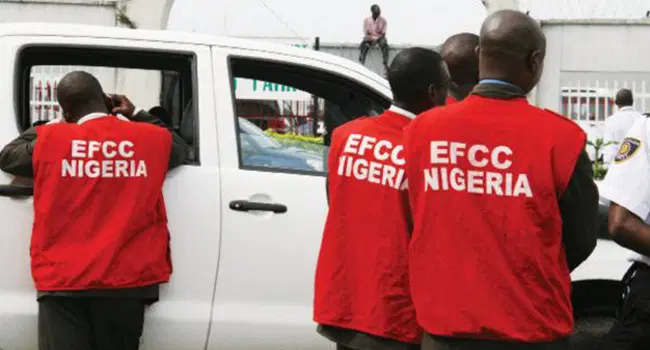
The Economic and Financial Crimes Commission (EFCC) is preparing to prosecute a Lagos-based Bureau De Change (BDC) operator, Mukhtar Adamu Muhammad, and three companies connected to him over allegations of terrorism financing, following an extensive investigation that reportedly began before sanctions were imposed by the United States government. The development has brought renewed attention to efforts by Nigerian and international authorities to disrupt financial networks suspected of supporting extremist activities.
Sources within the anti-graft agency disclosed that the terror financing investigation had reached an advanced stage before the United States announced sanctions against Muhammad and the associated firms.
According to the sources, investigators had already completed significant aspects of their findings and were in the process of preparing legal charges when the US government unveiled its sanctions package. The planned prosecution is expected to form part of broader efforts to strengthen Nigeria’s response to financial crimes linked to terrorism and extremist organisations.
The controversy intensified after the United States designated Mukhtar Adamu Muhammad and three Nigerian companies as alleged financial facilitators connected to the activities of the Islamic State of Iraq and Syria (ISIS). The sanctions formed part of a wider international action targeting three individuals and six entities accused of helping move funds through networks allegedly supporting ISIS operations in different countries.
US authorities claimed the sanctioned individuals and organisations played significant roles in facilitating financial transactions tied to the extremist group’s activities. The measures include restrictions designed to block access to financial systems and limit the movement of funds connected to the affected persons and entities.
The ongoing terror financing investigation is focused on allegations that the suspects participated in financial arrangements that enabled the movement of resources linked to extremist operations.
While details of the EFCC’s findings have not yet been made public, sources indicated that investigators examined transactions, corporate relationships and financial activities connected to the suspects and the companies under scrutiny. The allegations have heightened concerns about the use of legitimate financial channels and business structures to conceal or facilitate illicit transactions.
The case underscores increasing cooperation between Nigerian authorities and international partners in tracking and disrupting financial flows linked to terrorism.
Security experts have repeatedly identified financial networks as a critical component of extremist operations, noting that restricting access to funding can significantly weaken the capacity of terrorist groups to recruit, mobilise and sustain their activities. The terror financing investigation involving the Lagos-based BDC operator is expected to test Nigeria’s legal and enforcement mechanisms as authorities move from investigation to prosecution.
With investigations reportedly nearing completion, attention is now turning to the formal filing of charges and possible court proceedings.
If prosecuted, the case could become one of the most significant terrorism-financing matters handled by the EFCC in recent years, particularly because of its international dimensions and the parallel sanctions imposed by the United States. The outcome may also provide insight into how Nigerian authorities intend to address allegations involving financial institutions, foreign sanctions and suspected links to global extremist networks.